
What Is Diesel Bug? Causes, Costs and How to Stop It
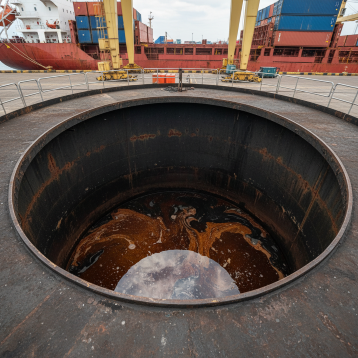
"Diesel bug" is one of those terms that gets used loosely in the marine and industrial world, but it describes something very specific: the growth of bacteria, yeasts and fungi inside a stored fuel tank. It is not algae. It is not a single organism. It is a consortium of microorganisms that live and feed at the interface between fuel and water and it is one of the most reliably costly problems in fuel management, precisely because it develops silently until something fails.
This article explains what diesel bug is, what it needs to grow, how it progresses from invisible contamination to tank-blocking sludge, and what the real cost looks like. It is part of our complete guide to fuel biocides and EU regulation - Read here.
What diesel bug actually is and what it is not
The term is informal, but the biology is well defined. Diesel bug refers to microbial contamination of hydrocarbon fuel by a mixture of bacteria, filamentous moulds and yeasts. These organisms are ubiquitous in the environment: they are present in air, water, soil and on every surface that handles fuel. The moment diesel leaves the sterile environment of a refinery, it is exposed.
The common misconception is that the culprit is algae. Algae require light for photosynthesis - there is none inside a sealed fuel tank. The organisms actually responsible are primarily heterotrophic bacteria and fungi, including species such as Hormoconis resinae (historically called the "kerosene fungus"), Pseudomonas species, Cladosporium and various yeasts. These species feed on the hydrocarbon content of diesel itself and reproduce rapidly under favourable conditions.
The four things diesel bug needs to grow
Microbial contamination in stored fuel is not random. It follows a consistent pattern wherever four conditions are met simultaneously:
- Water - free water at the bottom of the tank is the single most important enabling factor. Microbes live in the water phase and feed across the fuel-water interface. Even a few millimetres of free water is sufficient.
- Fuel - diesel is the nutrient source. Bacteria and fungi metabolise hydrocarbon molecules directly; FAME (biodiesel) components are particularly easy to degrade.
- Warmth - elevated temperatures accelerate growth. Tropical climates, engine rooms, and tanks exposed to solar gain all create conditions where microbial populations can double in hours rather than days.
- Stagnation - low fuel turnover and long storage periods allow colonies to establish and mature without disturbance. Emergency and standby fuel in particular typically sits untouched for months.
When all four conditions are present, contamination is not a risk: it is a near-certainty.
How contamination progresses: from interface to biofilm to sludge
The process follows a predictable sequence. Understanding each stage matters because the appropriate response - and the cost - differs dramatically depending on how far it has advanced.
Stage 1 - Inoculation
Microbial spores and cells enter the tank via incoming fuel, condensation, tank breathers or inadequate seals. In a newly filled tank this is essentially unavoidable. At this stage the contamination load is sub-threshold and undetectable without testing.
Stage 2 - Interface colonisation
Bacteria are drawn to the fuel-water interface, where they have simultaneous access to the water they need to live and the hydrocarbons they metabolise as food. They produce biosurfactants that help them assimilate fuel components, and begin multiplying. Fungi produce branching hyphae that physically bridge the fuel and water phases and adhere to tank surfaces.
Stage 3 - Biofilm formation
As the colony matures, microorganisms attach to tank walls, pipework and filter surfaces, secreting a protective matrix of polysaccharides. This is the biofilm - a slime layer that is physically protective, mechanically robust, and resistant to disturbance and, to some degree, to biocides at low concentrations. Biofilm accumulates at the tank bottom, on the underside of floats and around baffles where flow is low.
Stage 4 - Sludge and biomass
As cells die and are replaced, biomass accumulates. The result is a dark, viscous sludge - sometimes described as resembling coffee grounds or black slime - that sits at the fuel-water interface and coats tank surfaces. This sludge is the material most likely to be drawn into fuel lines when the tank is disturbed or fuel level drops below the sludge layer.
The operational damage diesel bug causes
Heavy microbial contamination causes a cascade of mechanical problems. The typical trigger is disruption - refuelling, heavy weather or simply drawing down a tank - which stirs the settled biomass into suspension:
- Filter blockage. Sludge and biofilm fragments rapidly blind fuel filters, restricting flow and triggering low-pressure warnings or shutdowns. This is usually the first sign that a tank has an established colony.
- Fuel starvation and engine failure. Blocked filters reduce fuel delivery to engines and generators. In marine propulsion systems this can result in loss of power at sea - a safety-critical event, not merely a maintenance inconvenience.
- Injector fouling. Disturbed biomass that passes a blocked or bypassed filter reaches the injectors. Deposits restrict spray geometry and reduce combustion efficiency; in severe cases, injector needles are physically damaged.
- Corrosion. Microbial by-products include organic acids that corrode tank walls, pipework and fuel-system components from the inside. Microbiologically induced corrosion (MIC) can penetrate carbon steel in months, creating structural failures and contaminating the fuel with rust particles.
- Fuel degradation. Microbial activity changes the chemical composition of the fuel. Total Acid Number (TAN) rises, oxidation stability falls, and the fuel may no longer meet the EN590 specification it left the refinery at - creating potential warranty and regulatory issues.
What diesel bug costs
Putting a number on a diesel bug incident is rarely straightforward because the costs are distributed across filter replacements, unplanned maintenance, fuel disposal, tank cleaning, downtime and, at worst, component replacement. However, the pattern is consistent:
- Immediate costs include emergency filter changes (multiple sets, fast), fuel testing, and biocide treatment at curative dose rates.
- Secondary costs include tank cleaning and fuel polishing to remove dead biomass after biocide treatment - the sludge does not disappear; it still has to be physically removed.
- Operational costs arise from the downtime itself. For a commercial vessel on charter, every hour of unplanned downtime has a direct financial consequence. For an offshore platform, power-generation failure from contaminated fuel can cause production delays.
The consistent finding from operators who have dealt with a serious incident is that the cost of a preventative dosing programme - including the biocide itself and periodic testing - is a small fraction of a single remediation event.
Why housekeeping alone is insufficient
The instinctive response to diesel bug is better housekeeping: drain the water, polish the fuel, clean the tank. These measures are necessary, and controlling free water is the single most effective preventive step available - because without water, microbial growth cannot proceed.
The problem is that once a biofilm is established, physical and mechanical measures are not sufficient to eliminate it. Fuel polishing removes suspended contamination but does not reach colonies embedded in biofilm on tank surfaces. Water removal reduces the growth rate but does not kill organisms already established in the system. To eliminate an active colony, you need a biocide - a product that is toxic to the microorganisms at the fuel-water interface and that can reach organisms in both the water phase and the fuel.
This is why the standard approach for managed marine and industrial fuel systems is a combination: housekeeping to control conditions, plus a compliant biocide to eliminate and prevent microbial populations.
What to do next
If your tanks have not been tested recently, or if you are seeing early signs - dark deposits on filters, hazy fuel or the characteristic sulphurous smell of microbial by-products - the practical steps are:
- Test the fuel. ATP testing, microbiological culture methods (ASTM D7463) or commercial dip-slide test kits can confirm whether an active colony is present and at what level.
- Control free water. Drain tank bottoms routinely. Monitor water content against the EN590 limit of 200 mg/kg. Modern FAME-blended fuels hold more water than mineral diesel, so more frequent monitoring is warranted.
- Treat with a compliant biocide. A curative dose (300 ppm) for evidence of contamination, or a shock dose (1,000 ppm) for heavy infestation - followed by filtration to remove dead biomass. Maintain with a preventative dose on subsequent fills.
- Check your biocide's compliance status. Not all biocide actives remain approved under EU rules. Use a product built on an active that is BPR PT6-approved and not classified carcinogenic - such as Fuelcare's FuelClear™ M15, based on C(M)IT/MIT.
Not sure what your fuel would show? Speak to the Fuelcare team about a fuel test and a compliant treatment - call +44 (0)1743 360784 or email sales@fuelcare.com.
Frequently asked questions
What causes diesel bug in a fuel tank?
Diesel bug is caused by bacteria, yeasts and fungi that colonise the fuel-water interface inside a tank. They need four things: water, diesel as a food source, warmth and low fuel turnover. When all four are present, a colony will establish. Water is the key driver - no free water means no meaningful microbial growth.
Is diesel bug actually algae?
No. Algae require light for photosynthesis, and fuel tanks are dark. The microorganisms responsible are heterotrophic bacteria and fungi - primarily species such as Hormoconis resinae, Pseudomonas and Cladosporium - that metabolise hydrocarbons and organic matter directly.
Can you get rid of diesel bug by polishing the fuel?
Fuel polishing removes suspended biomass and reduces contamination levels, but it does not kill an established colony or reach biofilm on tank surfaces. A biocide is required to eliminate the microbial population; polishing then removes the dead biomass that remains.
How do you know if you have diesel bug?
Early indicators include darkened or hazy fuel, a sulphurous or rotten-egg smell, dark deposits on filter elements, and increased water readings at the tank bottom. Confirmation requires testing - ATP luminometry, microbiological culture (ASTM D7463), or a commercial dip-slide kit can quantify the contamination level.
Sources and further reading
ASTM D6469 - Standard guide for microbial contamination in fuelsand fuel systems
Energy Institute - Guidelines for the investigation of themicrobial content of liquid fuels
The Seamanship Centre - Microbiological infestation of diesel fuel