
Site Fuel Sampling
Precision on-site fuel sampling to accurately assess fuel quality, detect contamination, and ensure compliance
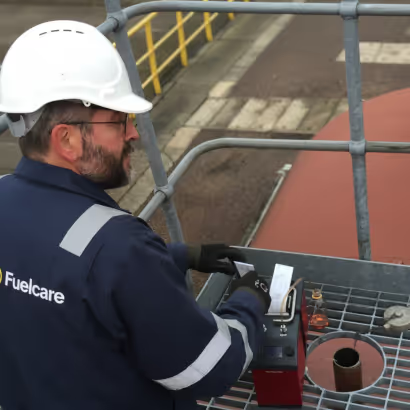
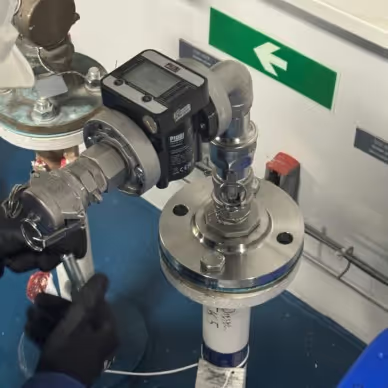
Fuelcare's on-site fuel sampling service follows ISO 3170 and ASTM D4057 procedures, collecting representative samples from multiple points across your fuel storage infrastructure - including tank bottoms, delivery lines and dispensing points.
Results are analysed by accredited laboratories, providing the detailed data needed to make informed decisions on biocide treatment, fuel polishing or further investigation.
Why Site Fuel Sampling Matters
Site fuel sampling is the critical first step in understanding the true condition of your fuel. Without representative samples, any laboratory analysis, treatment or mitigation that follows is built on unreliable data.
Fuelcare follows ISO 3170 best practice sampling procedures to collect samples that accurately reflect the condition of fuel at each point in your storage and dispensing system - from tank base to dispenser outlet - ensuring test results are accurate, reliable, and actionable.
The Issue
Inaccurate or non-representative sampling can lead to false negatives for contamination, delayed intervention, and increased operational risk.
Our Solution
ISO 3170-compliant representative fuel sampling provides reliable data for informed decision-making, preventing equipment damage, unplanned downtime and regulatory non-compliance.
Site Fuel Sampling Process
Site Assessment & Planning
Our technicians conduct a preliminary assessment of your fuel storage and dispensing infrastructure to identify optimal sampling points and develop a tailored sampling plan.
Precision Sample Collection
Using specialised, ISO 3170-compliant equipment, we extract representative fuel samples from various locations, including tanks (top, middle, bottom), delivery lines, and dispensing points.
Secure Sample Handling
Samples are immediately transferred into sterile, sealed containers, labeled with precise metadata, and prepared for secure transport to accredited laboratories.
Logistics & Timely Reporting
We manage all logistics for timely delivery to the lab and ensure all documentation is complete for seamless analysis and comprehensive reporting.
What Site Fuel Samples We Collect
Collection points for heavy contaminants like water, sludge, and microbial growth, which settle at the lowest points of storage tanks.
Representative samples from the bulk fuel to assess overall fuel quality and detect suspended contaminants or early-stage degradation.
Samples taken directly from fuel lines or nozzles to verify the quality of fuel being supplied or dispensed, ensuring integrity throughout the system.
Analysis of filter contents provides insights into the types and volume of particulate matter accumulating within the system.
Collection of physical deposits from tank walls or internal structures for direct microbial and chemical identification.
Fuelcare adheres to internationally recognised sampling protocols.
ISO 3170 (Petroleum liquids — Manual sampling)
Adherence to this international standard ensures that every sample collected is representative of the bulk fuel, providing accurate data for analysis.
Energy Institute (EI) Guidelines
Our sampling protocols incorporate best practices and recommendations from the Energy Institute, reflecting current industry standards for fuel quality management.
ASTM D4057 (Standard Practice for Manual Sampling of Petroleum and Petroleum Products)
Compliance with ASTM D4057 for accurate and consistent manual sampling procedures, critical for reliable fuel quality assessment.
Controlled Environment Procedures
Strict protocols for equipment cleaning, sterile container usage, and immediate sealing minimise the risk of external contamination during the sampling process.
Benefits of Site Fuel Sampling
Identify issues before they compromise fuel quality and operational performance
Accurate Diagnostics
Obtain truly representative samples, enabling precise laboratory analysis and accurate identification of fuel contamination issues.
Detect Problems Early
Detect problems early, preventing minor issues from escalating into major operational failures, equipment damage, or regulatory non-compliance.
Data-Driven Decisions
Foundation for reliable fuel quality data, allowing engineers and procurement teams to make informed decisions on fuel treatment, maintenance, and supply chain management.
Which Industries and Sectors Use Fuelcare's Site Fuel Sampling?
Rail Operators
Ensuring fuel quality to prevent engine issues and maintain operational schedules across demanding rail networks.
Aviation
Critical for flight safety and engine reliability, where fuel cleanliness is paramount for jet fuel
Marine & Offshore
Monitoring bunker and operational fuel quality for vessels and offshore installations, reducing maintenance and ensuring regulatory compliance.
Power Generation & Data Centres
Protecting backup and primary power systems, reducing generator failure, downtime and storage-related fuel degradation.
Military & Defence
Guaranteeing operational readiness and asset longevity for essential defence equipment in challenging environments.
Heavy Industry & Mining
Protecting critical machinery and vehicle fleets from fuel-related performance issues and breakdowns.
Bulk Storage & Terminals
Maintain fuel quality throughout the storage and distribution network, preventing contamination before dispatch.
Fuelcare Site Fuel Sampling FAQs
Find answers to frequently asked questions about Fuelcare's Site Fuel Sampling capabilites.
Site fuel sampling is the collection of representative fuel samples from specific points in a fuel storage or distribution system for laboratory analysis. It is the foundation of effective fuel quality management - without accurately collected samples, laboratory results are unreliable. Fuelcare's technicians collect samples following ISO 3170, ASTM D4057 and Energy Institute guidelines to ensure results accurately reflect the true condition of your entire fuel system.
Fuelcare collects representative samples from multiple points across your fuel infrastructure, including: tank bottoms and sumps (where water and contamination accumulate), mid-tank fuel levels, fuel delivery and dispensing points, fuel filter debris (to detect particulate and microbial contamination in the flow path), and biofilm and sludge deposits from tank surfaces. Sampling multiple points provides a complete diagnostic picture of the fuel system's condition.
For most commercial and industrial fuel systems, Fuelcare recommends a minimum of one site sampling visit per year. For standby power systems (data centres, hospitals, emergency services generators), critical marine or offshore operations, military fuel logistics, or higher-risk storage environments, quarterly sampling is recommended. Fuelcare will advise on the optimal sampling frequency for your specific application and risk profile.
No extensive preparation is required. Fuelcare's technicians bring all sampling equipment and documentation. It is helpful to ensure safe access to all sample points (tank hatches, filter housings, delivery connections) and to have any recent fuel delivery records or previous test results available. If your site has specific access, permit-to-work or PPE requirements, please advise Fuelcare in advance of the visit.
Collected samples are securely packaged and transported to accredited laboratories for analysis covering water content, microbial activity (IP-385/IP-472), particle count (ISO 4406), fuel degradation markers and any other client-specified parameters. Fuelcare provides a clear written report with findings and, where issues are identified, a recommended treatment action plan.
Visit duration depends on the number of tanks, sample points and site accessibility. A single-tank visit typically takes one to two hours. Multi-tank or complex fuel distribution systems may require a half or full day. Fuelcare will advise on the expected visit duration at the planning stage.