
Fuel Additives that Optimise Performance and Support Decarbonisation
Industries need to reduce harmful emissions due to regulations and business requirements. While sustainable fuels are often recommended, they carry higher costs, engine damage risks, and require costly fleet modifications.
Fuel additives have advanced significantly over the last decade, offering a cost-effective way to reduce carbon usage, cut fuel spend, and improve fleet reliability. Their use is now widespread across medium to heavy-duty diesel industries prioritising decarbonisation.
Fuelcare additives use advanced chemistry to keep new engines clean or restore older engines to peak performance.
Why Choose Fuelcare Additives?
Fuelcare fuel additives deliver proven performance across shipping, rail, bus, military and offshore operations, supporting fuel quality management, emissions compliance and system integrity across a wide range of hydrocarbon fuels.
Contaminant Control
Fuelcare additives help eliminate bacteria, fungi and water-related contamination within fuel systems, reducing microbial growth, minimising sludge formation and supporting cleaner, more stable stored fuel.
Corrosion Inhibition
Fuelcare's corrosion inhibitor fuel additives protect metal surfaces from oxidation and moisture-related degradation, extending the operational life of fuel tanks, pipelines, injectors and other critical components.
Efficient Combustion
Fuelcare diesel fuel additives improve combustion characteristics to reduce harmful emissions and recover fuel efficiency losses caused by engine deposits and fuel degradation.
Three Proven Additive Formulas
Each Fuelcare additive is developed to tackle a specific fuel contamination challenge, helping protect fuel quality, improve system performance and support more reliable operation across storage and engine applications.
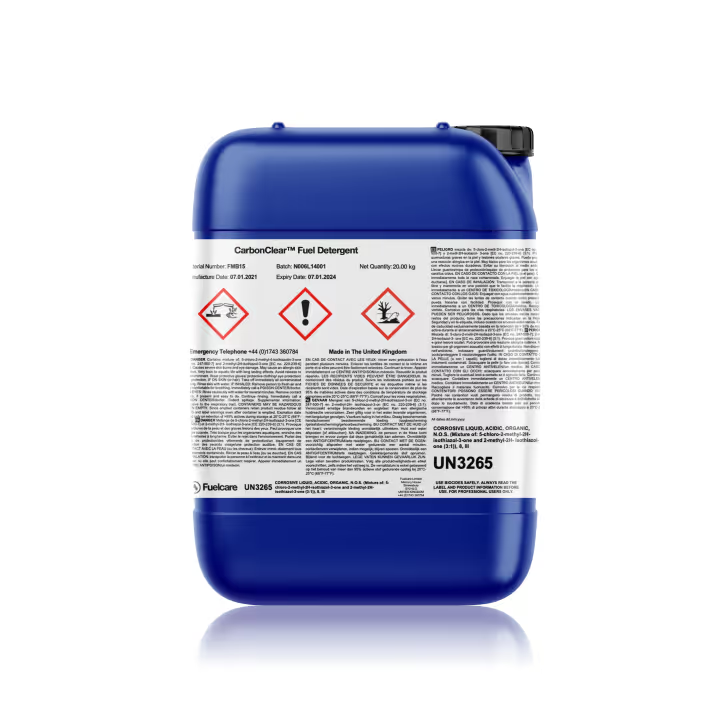
CarbonClear™
Decarbonise, improve fuel quality and reduce fuel usage without additional equipment.
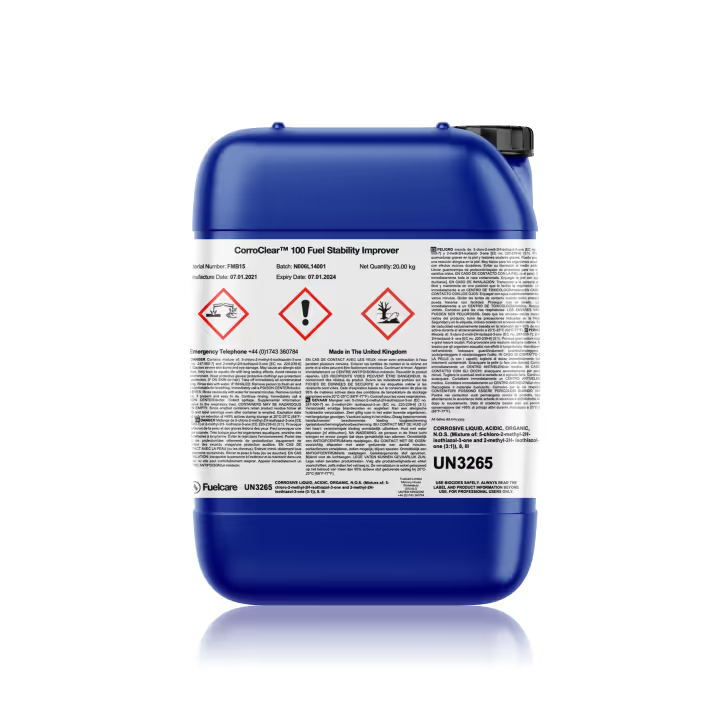
CorroClear™ 100
Advanced, high-flash corrosion inhibitor specifically formulated to protect fuel tanks, injectors, and engine components from oxidation and rust.
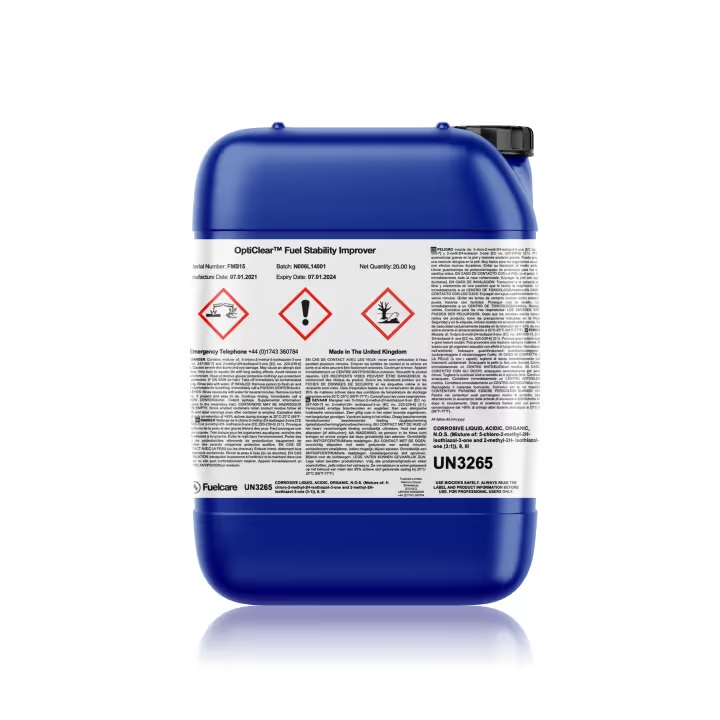
OptiClear™
Advanced fuel additive engineered to extend the storage life and maintain the integrity of liquid hydrocarbon fuels.
Technical support built for demanding operations
Fuelcare engineers work directly with your teams to address the regulatory requirements and operational challenges specific to your sector.
We have deep experience in shipping, offshore, military and rail fuel systems, and understand the compliance and performance demands that come with each.
Our specialists support every stage of fuel additive treatment - from initial product selection through to dosing optimisation and ongoing programme management.
Regulatory guidance
Support with compliance across international maritime standards, fuel additive supplier approval processes and sector-specific regulatory requirements.
Application support
Dosing rate advice, treatment protocol development and additive selection support based on your fuel type, operational environment and equipment specifications.

Fuel Additives FAQs
Find answers to frequently asked questions about fuel additives and their applications.
A fuel additive is a chemical formulation dosed into fuel in small quantities to enhance performance, stability or protection. Unlike biocides - which specifically kill and prevent microbial contamination - fuel additives address a broader range of fuel quality challenges including engine deposit formation, system corrosion, fuel oxidation and CO2 emissions. Fuelcare's additive range includes a fuel detergent (CarbonClear™), a corrosion inhibitor (CorroClear™100) and a stability improver (OptiClear™), each targeting a distinct challenge.
Yes - when the right additive is selected and properly dosed. Fuelcare's CarbonClear™ fuel detergent has delivered verified reductions of 5–10% in CO2 emissions and 3–5% in fuel consumption across marine, rail and offshore operations, treating over 100 million litres annually. These results are achieved by cleaning fuel injectors and combustion chambers, restoring the fuel atomisation efficiency that deposit build-up gradually degrades over time.
Fuelcare's additives are formulated to be compatible with standard fuel system materials including stainless steel, aluminium, rubber, and common seal and gasket compounds. They are suitable across a wide range of engine types. Material compatibility certificates for each product are available in Fuelcare's Technical Resources library. Always confirm compatibility with your specific OEM maintenance requirements before use.
Yes. Fuelcare's products are designed to be used together. A common combined protocol is to dose OptiClear™ (350 ppm) and FuelClear™ M15 (150 ppm) simultaneously every three months — a 500 ppm combined treatment addressing both oxidation and microbial contamination in a single step. CarbonClear™ can also be used alongside a biocide treatment. Contact Fuelcare's technical team for guidance on co-treatment protocols for your specific application.
Modern diesel fuels contain FAME (Fatty Acid Methyl Esters) - biodiesel required under Renewable Transport Fuel Obligations. FAME absorbs water more readily than mineral diesel, promotes microbial growth, oxidises faster in storage and can polymerise to form varnish and injector deposits. Fuelcare's CarbonClear™ and OptiClear™ additives directly address these FAME-related degradation issues, keeping fuel systems clean and fuel within specification even at higher biodiesel blend levels.