Keeping Critical Defence and Marine Fuel Systems Clean, Reliable and Operational
.jpeg)
Project overview - Marine and naval operators depend on clean, stable fuel. Whether powering a naval vessel, ferry, superyacht, cruise ship or offshore support vessel, contaminated fuel can quickly become an operational, financial and safety issue.
Fuelcare has been supporting customers with fuel treatment and fuel contamination control since 1989. The company supplies fuel biocides, additive detergents, monitoring technology and filtration solutions across a wide range of sectors, with particular experience in the marine and naval market.
Its Fuelclear™ M15 fuel biocide is used by marine customers to control microbial contamination in fuel, while CarbonClear™fuel additive detergent supports cleaner fuel systems and improved combustion performance as part of a wider fuel management programme.
Fuelcare’s marine customers include major commercial and defence operators, with Fuelclear™ M15 holding a NATO Stock Number and being used in naval applications.
Products and Services
- Fuelclear™ M15 fuel biocide
- CarbonClear™ fuel additive detergent
- Fuel polishing and filtration systems
- Fuel quality monitoring and technical support
- Preventative and curative fuel contamination treatment
Application
Marine gas oil, vessel fuel storage tanks, naval propulsion support systems, superyachts, ferries, cruise vessels and commercial marine operators.

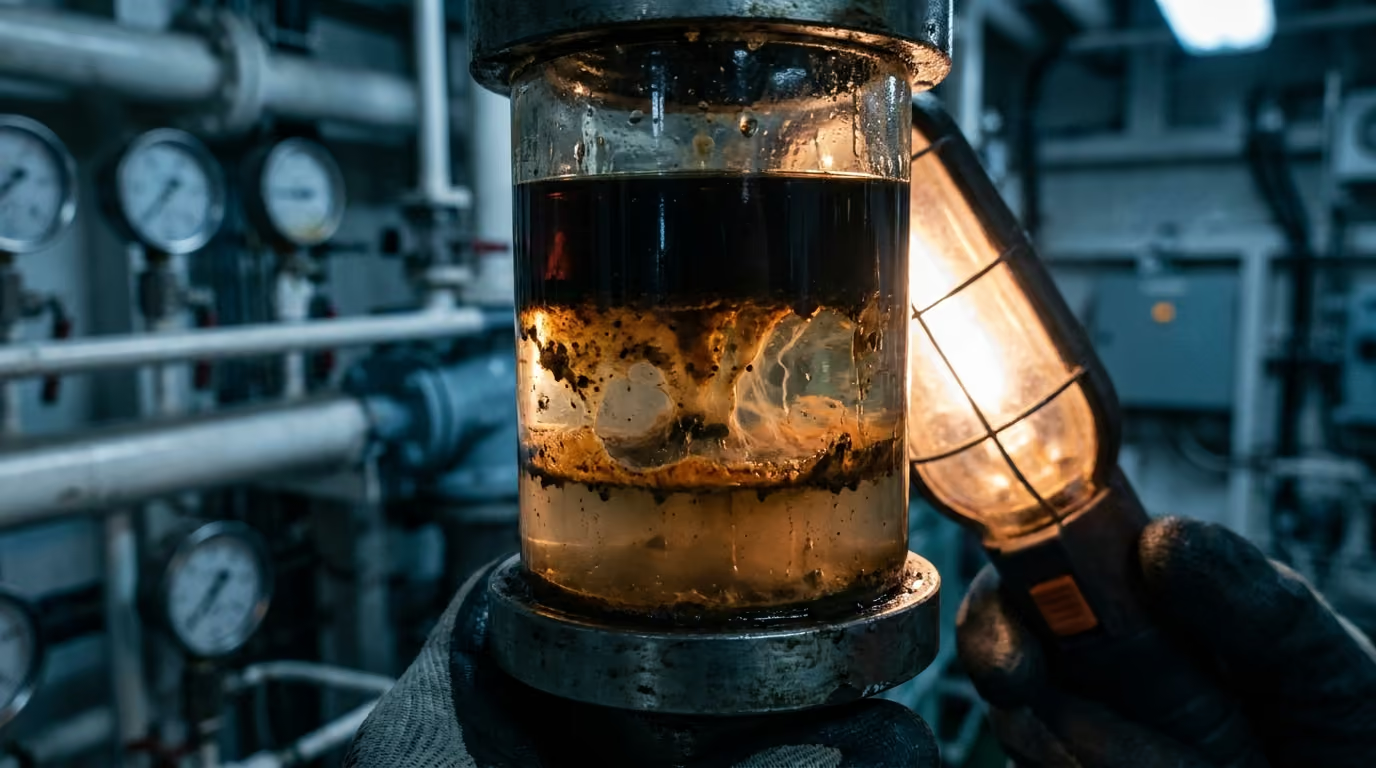
The Challenge - Water, microbial growth and fuel contamination in marine environments
Marine fuel systems face a unique contamination challenge. Unlike many land-based storage environments, vessels operate where water is an ever-present risk. Tanks surrounded by water, exposed to fluctuating temperatures and condensation, with fuel passing through complex supply chains and varying storage durations are ideal conditions for microbial growth.
Microbial contamination is caused by bacteria, yeasts and fungi that live at the fuel/water interface. Microbes are often present at low levels, but where water accumulates, growth can increase rapidly and cause significant operational problems.
As Oliver Rumford-Warr, Managing Director of Fuelcare Ltd, explains: "Microbial growth is always present to some degree. The issue is whether the conditions allow it to grow. In marine fuel systems, water is the key driver - more water means more microbial growth."
The move toward renewable and blended fuels adds pressure: biodiesel content can increase the tendency for water to be present, raising contamination risk, especially for long-term storage, intermittent operation or strategic fuel reserves.
The operational risk
If microbial contamination is not identified and treated, it can lead to:
- Blocked fuel filters and restricted fuel flow
- Fuel pump damage and injector or engine performance issues
- Tank and fuel-system corrosion
- Sludge formation and increased maintenance
- Vessel downtime and loss of propulsion or power generation
- Safety risk during passage or operation.
In a commercial marine environment this can mean cancelled voyages, disrupted charters or costly maintenance. In a naval environment it can affect vessel readiness and operational resilience.
Oliver Rumford-Warr gives the example of a vessel mid-passage: "You might be mid-Atlantic when microbial growth that has gone undetected is suddenly drawn into the filtration system. It blocks filters, can harm fuel pumps and may shut engines down. At that point, it is no longer just a fuel-quality issue - it can become a safety issue."
Fuel biocide treatment is therefore as much a preventative measure as a corrective one - "a very low-cost insurance policy compared with the cost and consequences of fuel contamination."
The Solution - FuelClear™ M15 fuel biocide and CarbonClear™ fuel additive detergent
Fuelcare supports marine and naval customers with a combination of FuelClear™ M15 fuel biocide, CarbonClear™ fuel additive detergent, fuel polishing, filtration and technical fuel-management advice. The approach works two ways:
- Curative treatment where microbial contamination has already been identified
- Preventative treatment to maintain fuel quality and reduce the risk of growth developing
Some vessels carry FuelClear™ M15 onboard for treatment if an issue arises; others use it as part of a planned fuel-maintenance programme.
How FuelClear™ M15 works
FuelClear™ M15 controls microbial contamination in fuel - the bacteria, yeasts and fungi that live at the fuel/water interface and create sludge, acids and biomass behind blocked filters, corrosion and fuel-system problems. It is used to treat the tank and control that microbial activity, applied as either a preventative or curative treatment. Typical treatment levels discussed by Fuelcare are:
- Preventative dose: 150 ppm
- Curative dose: typically double the preventative dose
- Heavy contamination: higher dosing in extreme cases, subject to technical guidance.
Final dosing rates should always be checked against Fuelcare's current Technical Data Sheet, Safety Data Sheet and product label. Please see the Technical Resources section for more information.
The role of CarbonClear™
Where FuelClear™ M15 targets microbial contamination, CarbonClear™ helps keep fuel systems cleaner by managing deposits and improving overall fuel-system condition, supporting cleaner operation as part of a wider preventative fuel-maintenance programme.
Fuel polishing and filtration
Fuelcare also supports customers with fuel polishing and filtration, recirculating fuel to remove water, sludge, microbial residues, fine particulates, rust and biodiesel-related deposits. Once FuelClear™ M15 has controlled the microbial activity, filtration or polishing removes the resulting dead matter and sludge.
As Oliver Rumford-Warr puts it: "A lot of customers combine the biocide treatment with filtration. Between the two, you are controlling microbial growth and taking harmful contaminants out of the fuel."

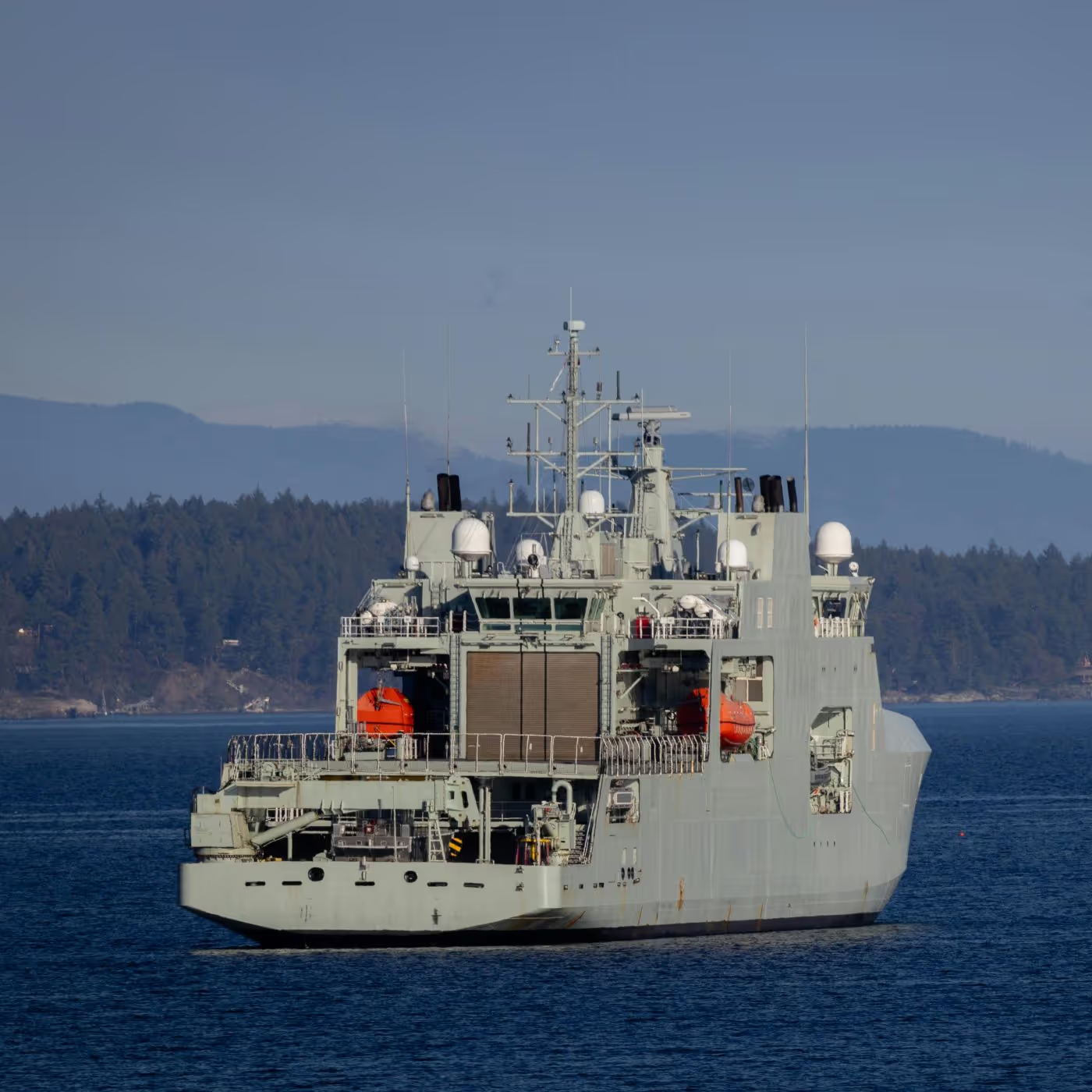
The Results - Improved fuel quality, reduced risk and greater operational confidence
By using FuelClear™ M15 and CarbonClear™ as part of a wider fuel-management programme, marine and naval operators reduce contamination risk and improve confidence in the reliability of critical fuel systems. Benefits include:
- Reduced microbial activity in stored fuel
- Lower risk of blocked filters and improved fuel housekeeping
- Reduced sludge and contamination build-up
- Cleaner fuel reaching engines and generators
- Reduced risk of fuel pump and system corrosion
- Better protection for long-term fuel storage
- Greater confidence in vessel readiness and lower risk of unexpected downtime.
For naval and defence applications these results are especially important: fuel quality directly supports vessel readiness, operational availability and engineering confidence. FuelClear™ M15 holds a NATO Stock Number and has been used in naval applications, including work associated with the Queen Elizabeth-class aircraft carrier programme.
"FuelClear™ M15 has been selected for use across Royal Navy submarine and Queen Elizabeth Class aircraft applications, reflecting its ongoing regulatory availability and Gas Turbine certification. Fuelcare remains the sole approved supplier of fuel biocides to the Royal Navy and other NATO navies."