
Fuel Dispensing Data Monitoring
Real-time cloud-based monitoring and IoT control for fuel dispensing operations
Record every fuel dispense transaction across forecourts, depots, and terminals with real-time alerts and automated reporting.
Fuelcare's IoT-connected dispensing monitoring system delivers complete transaction-level visibility across all fuelling points. The system captures dispense volume, vehicle and asset ID, flow rate, and timestamp data 24/7 via RFID nozzle identification and positive displacement flow meters.
Automated alerts notify operations teams when anomalies or unauthorised dispense events are detected, and the system's API integrates with existing fleet management and SCADA systems for streamlined data workflows.
Why Fuel Dispensing Data Monitoring Matters
Manual fuel recording relies on meter readings and operator input, leaving gaps in transaction data, no vehicle-level visibility, and no automated detection of dispensing anomalies or unauthorised fuelling.
The Issue
Without automated dispense recording, fuel losses, incorrect issues, and unauthorised transactions often go undetected. Vehicle-level fuel consumption cannot be accurately tracked or audited.
Our Solution
RFID-based nozzle identification records every dispense event against a specific vehicle or asset ID. Volume, fleet number, and timestamp are captured automatically, with alerts triggered for anomalies or unrecognised vehicle IDs.
Fuel Dispensing Data Monitoring Process
Positive displacement flow meters and RFID identification are installed at each fuelling point. Dispense data is transmitted in real time via GSM to a cloud-based platform, providing transaction-level visibility across all sites and assets.
Contact us to discuss deployment requirements for your dispensing infrastructure.
System Assessment
On-site survey of fuelling infrastructure, meter locations, pump configuration, and existing plant. Defines hardware specification, RFID deployment points, and integration requirements.
Sensor Installation & Configuration
Flow meters and RFID nozzle transmitters installed at each fuelling point. Vehicle-side tags fitted adjacent to fuel tanks. System integrated with existing pumps and meters with minimal plant modification.
System Configuration
Each vehicle or asset is registered against a unique RFID tag. Alert thresholds, override permissions and reporting schedules are configured to operational requirements.
Data Reporting & Integration
Every dispense event logged with volume, fleet number, and timestamp. Automated reports, anomaly alerts, and CO₂ equivalence data accessible via web dashboard. API integration with fleet management and SCADA systems available.
Real-Time Fuel Dispensing Data Monitoring Dashboard
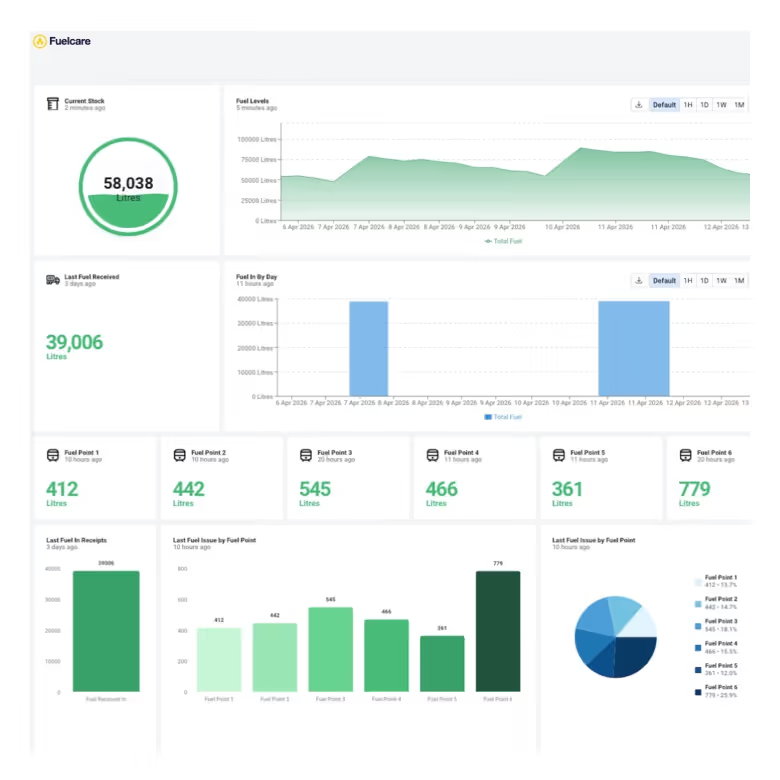
A web-based platform recording every dispense transaction across all connected fuelling points. View live dispensing activity, vehicle-level fuel issues, alert history, and consumption trends - accessible via desktop, tablet, or mobile.
Live Dispense Metrics
Volume dispensed, fleet/vehicle ID, fuelling point, flow rate, and transaction timestamp displayed in real time across all sites.
Threshold Alerts
Automated email and SMS notifications triggered by anomalous dispense volumes, unrecognised vehicle IDs, or flow rate irregularities.
Historical Analytics
Transaction-level trend data supporting vehicle consumption analysis, annual fuel usage comparisons, and CO₂ equivalence reporting.
System Integration
API connectivity enables direct data flow into existing fleet management, asset management, and SCADA systems.
What is Monitored
Transaction-level recording of every fuel dispense event across all connected fuelling points
Positive displacement flow meters record the exact volume delivered at each fuelling point. Data is captured per transaction and logged against vehicle ID, time, and location.
RFID nozzle transmitters and vehicle-side tags identify each asset at the point of fuelling. The system prevents dispensing to unrecognised vehicles, with a secure supervisor override available.
Real-time flow rate data identifies pump performance issues, blockages, or irregularities across supply headers and individual fuelling points.
Every dispense event is time-stamped and logged with fleet number, volume, fuelling point, and operator data - providing a complete audit trail for each site.
Automated alerts triggered by dispense volumes outside expected parameters, duplicate transactions, or attempts to fuel unregistered vehicles.
Benefits of Fuel Dispensing Data Monitoring
Accurate transaction records, loss prevention, and operational visibility across all fuelling points
Complete Transaction Accountability
Every litre dispensed is recorded against a specific vehicle, fuelling point, and timestamp - eliminating manual recording errors and providing a verified audit trail for fuel management and cost allocation.
Loss Prevention & Anomaly Detection
Automated alerts identify dispensing anomalies, unauthorised fuelling attempts, and discrepancies between expected and recorded volumes before losses accumulate.
Operational & Fleet Insight
Historical transaction data supports vehicle-level consumption analysis, annual fuel usage trending, CO₂ equivalence reporting, and maintenance scheduling based on actual fuel use patterns.
Which Industries and Sectors Use Fuel Dispensing Data Monitoring?
Rail Operators
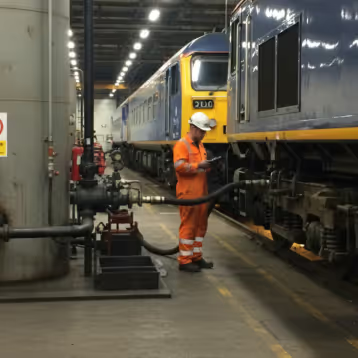
Records every fuel dispense transaction against individual train IDs across depot fuelling points. Supports vehicle-level consumption tracking, anomaly detection, and audit compliance across DMU consists and locomotives.
Aviation
Monitors fuel dispense volumes and transaction records at aircraft refuelling points. Ensures accurate fuel issue data per aircraft, supports regulatory audit trails, and flags dispensing anomalies before they affect airside operations.
Marine & Offshore
Tracks fuel dispensed to vessels at bunkering and operational fuelling points. Records volume, vessel ID, and transaction time to support fuel allocation, loss prevention, and compliance reporting.
Power Generation & Data Centres
Monitors fuel dispensed to generators and mobile plant. Provides accurate consumption records per asset, supporting planned maintenance scheduling and ensuring fuel availability for critical and emergency operations.
Military & Defence
Records fuel issues to vehicles and equipment across depot and field fuelling points. Provides vehicle-level transaction data and anomaly alerts, supporting fuel accountability and asset management in demanding operational environments.
Heavy Industry & Mining
Tracks fuel dispensed to mobile plant, heavy equipment, and site vehicles. Identifies consumption anomalies by asset, supports cost allocation across operational areas, and provides data for maintenance and efficiency planning.
Bulk Storage & Terminals
Records all fuel dispense transactions from bulk storage into tankers, vehicles, or distribution systems. Provides verified volume data, anomaly detection, and automated reporting to support stock reconciliation and loss prevention.
Fuelcare Fuel Dispensing Data Monitoring FAQs
Find answers to frequenstly asked questions about Fuelcare's Fuel Dispensing Data Monitoring Services.
Fuelcare's fuel dispensing data monitoring service records and analyses every fuel dispense transaction at a depot, forecourt or fuel point. Using RFID nozzle identification and positive displacement flow meters, the system captures vehicle or asset ID, volume dispensed, flow rate and timestamp for every transaction. Data is transmitted in real time to a secure cloud dashboard, giving operations teams complete visibility of fuel usage across their fleet.
Each fuel nozzle is fitted with an RFID reader that identifies the vehicle or asset being fuelled via an RFID tag - supplied as a fob, card or vehicle-mounted transponder. Every dispense transaction is linked to a specific vehicle, driver or asset, creating an auditable, tamper-resistant record of who fuelled what, when, and with how much fuel.
Yes. The system generates automated alerts for anomalous events including: dispensing from an unregistered or unauthorised asset, unusual volumes, out-of-hours dispensing, or rapid re-fuelling that may indicate a container fill rather than a vehicle fill. Alert thresholds are fully configurable by the site operator.
Yes. The system supports API integration with major fleet management, transport management and ERP platforms, enabling fuel consumption data to be reconciled automatically with mileage, journey and maintenance records. This eliminates manual fuel reconciliation and provides accurate cost-per-vehicle and cost-per-journey fuel reporting.
For every dispense event, the system records: asset or vehicle ID (via RFID), fuel volume dispensed (litres), flow rate, dispense start and end timestamp, fuel point location identifier, and operator ID where applicable. All data is stored securely in the cloud and available for reporting, export and API integration.
Required hardware includes RFID-enabled nozzle units, positive displacement flow meters installed inline at each fuel delivery point, and a 4G-connected data logger. All hardware is installed by Fuelcare's engineers. Most standard installations covering up to four fuel points are completed within a single day.